Laboratory Testing Services

Laboratory Division:

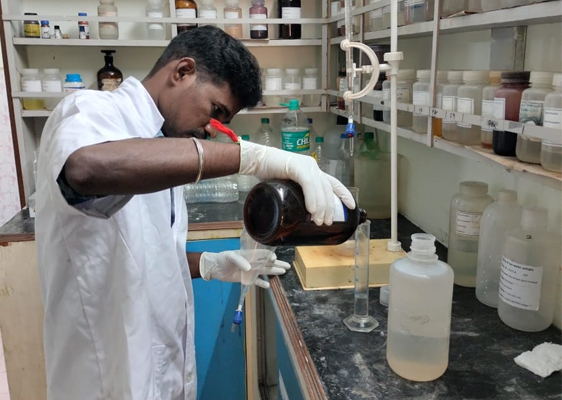
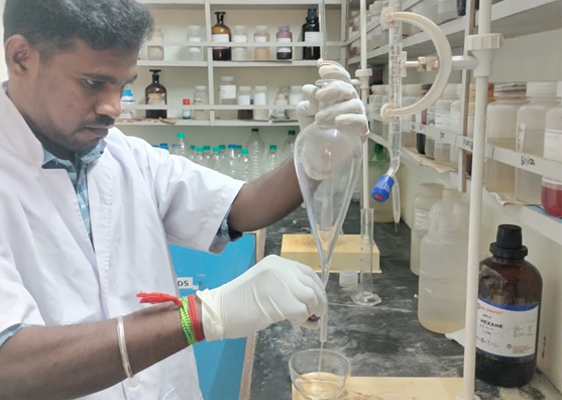
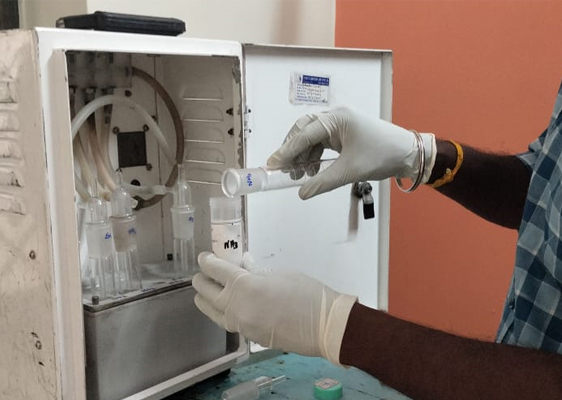
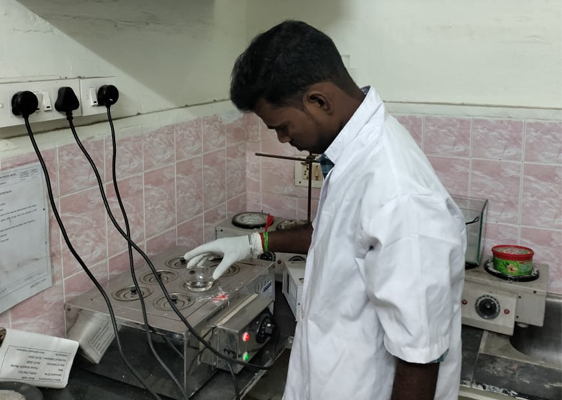
Physio chemical, Biochemical and Microbiological testing. Air, Water, Waste Water and Solids quality analysis.
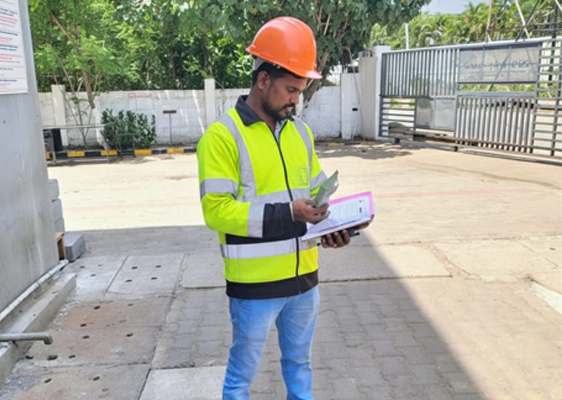
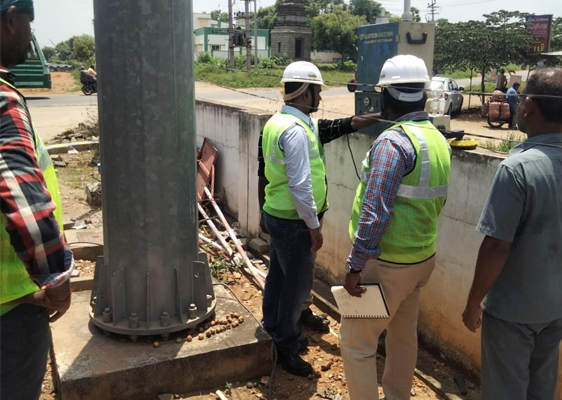
Monitoring of Air, Noise, Lux, Stack and Micrometeorology at customer’s premises as per TNPCB norms.
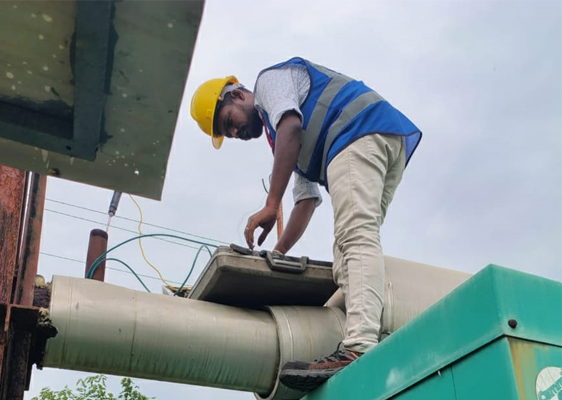
Stack gas, Forklift, scrubber gases, process vents and fugitive emission and VOC analysis.
NABL Accredited Testing Laboratory (lab Id- TC-13841).
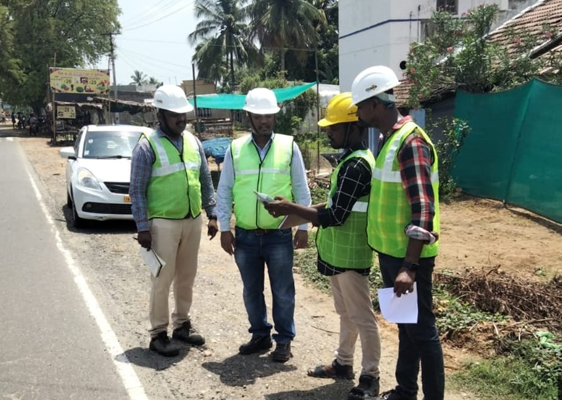
Air Quality Monitoring in Chennai

Parameter:

PM2.5, PM10, SO₂ (Sulphur Dioxide), NO₂ (Nitrogen Dioxide), CO (Carbon Monoxide), O₃ (Ozone), NH₃ (Ammonia), Pb (Lead), AQI (Air Quality Index)

Description:

Monitoring air quality in Chennai is essential due to increasing urbanization, traffic congestion, and industrial growth. The city regularly tracks key pollutants such as PM2.5 and PM10, which are tiny particulate matters that affect lung health. Sulphur Dioxide (SO₂) and Nitrogen Dioxide (NO₂) mainly come from industries and vehicles, causing respiratory issues and acid rain.

Carbon Monoxide (CO) is monitored as it reduces oxygen supply in the body, while Ozone (O₃) at ground level worsens asthma and breathing problems.Read More
Ammonia (NH₃) is checked due to its release from waste and agriculture, and Lead (Pb) is measured because of its harmful impact on the nervous system.
These pollutants are combined into the Air Quality Index (AQI), which provides a simple scale for citizens to understand overall pollution levels—from Good to Severe. Regular monitoring helps government agencies, researchers, and citizens take preventive measures.
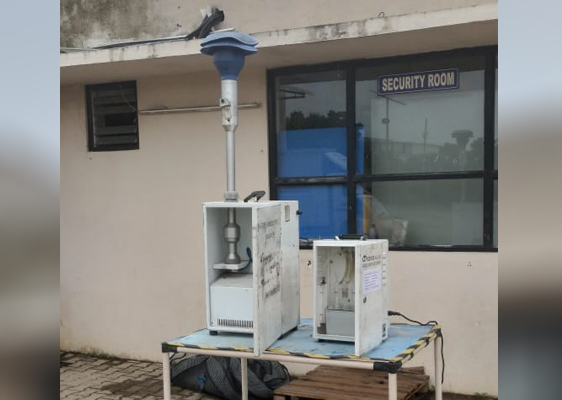
Ambient Air Quality Monitoring in Chennai

Parameter:

PM10, Pm2.5, SO2, NO2, Ammonia, Benzene, Benzo (a)
Pyrene, Lead, Nickel, Arsenic, Ozone and CO.

Description:

Air pollution has been defined as the presence in the atmosphere of any air pollutant. Air pollutant is any solid liquid or gaseous substance present in the atmosphere in such concentration as may be or tend to be injurious to human beings or other living creatures or plants or property or environment. Toxicity can be defined as the relative ability of a substance to cause adverse effects in living organism. The concentration of pollutants in the air, water & soil that results from these emissions influences the magnitude of human exposures through organs such as the nose, mouth & skin. Read MoreHence it is necessary to understand the pathway from source to effect, to measure & control from any of the places in the pathway. Therefore, Ambient Air Quality Monitoring is required to determine if air quality is meeting national standards , the highest pollutant concentrations, to Understand how pollutants behave and their relationship with the weather, to validate pollution modelling, used to test ‘what if’ scenarios, Forecast air quality, Evaluate the effectiveness of air pollution control programs, Evaluate the effects of air pollution on public health, Track the progress of plans for meeting air quality standard,  Determine air quality trends, Develop responsible and cost-effective pollution control strategies and policy decisions.

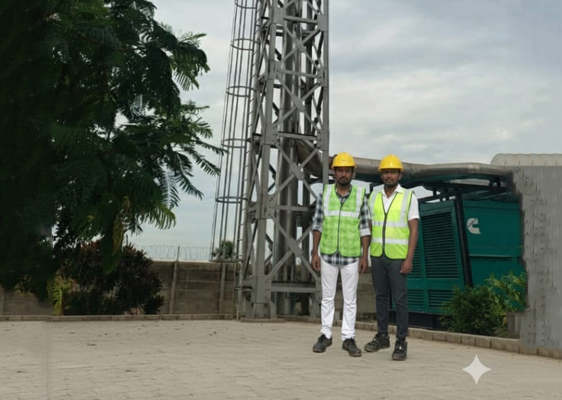
Stack Monitoring in Chennai

Parameter:

Acid Mist (H2SO4), Ammonia, Carbon dioxide, Carbon monoxide, Flow Rate, Heavy metals as Pb, Hydrogen Sulphide (H2S), Mercury, Oxides of Nitrogen, Oxygen, Particulate matter, Sulphur dioxide, Temperature, Velocity, Volatile OrganicCompounds.

Description:

Process emission from manufacturing industries are set to meet regulatory emission standards to comply as well as to mitigate any impact on the public health. Regular & Continuous monitoring of stack & process emission shall therefore ensure regulatory emission standards are met, the level of pollution do not affect public health, maintain air pollution levels at innocuous levels, and assist Industry develop better control measures. Read MoreStack & Process emission monitoring will therefore involve analysis for constituents in dust, odour, mist, smoke etc., and major pollutants monitored are VOC, CO, NOX,SO2, PM2.5, PM10, HF, HCL, Hg etc, thus determine the quality, quantity & type of pollutant emitted, efficiency of air pollution control equipment & establish an appropriate design of air pollution control equipment.

⁠Noise Monitoring in Chennai

Parameter:

Noise- Ambient

Description:

Noise monitoring assists identify predominant sources of noise, wherein employees could be exposed to high noise levels, which can result in hearing loss, tinnitus, migraine, and other health concerns. Noise Monitoring therefore enables one to undertake appropriate measures to control noise levels to within lower levels ie noise levels above 75 dB(A) are harmful, although WHO stipulates any Noise Level above 65 dB(A) as noise pollution, whereas any Noise Levels above 30 dB(A) can affect peaceful sleep at Nights. Regular Noise Monitoring will thus enable incorporate appropriate mitigation measures to prevent Noise pollution and its deleterious effect on Human Beings & other living creatures.

⁠Water Testing Laboratory in Chennai

Parameter:

pH, TDS (Total Dissolved Solids),Hardness, Scaling, Chlorides, Sulphates, Nitrates, Fluoride, Iron, Bacteria (Coliform / E. coli), Heavy Metals (Lead, Arsenic, Mercury, etc.)

Description:

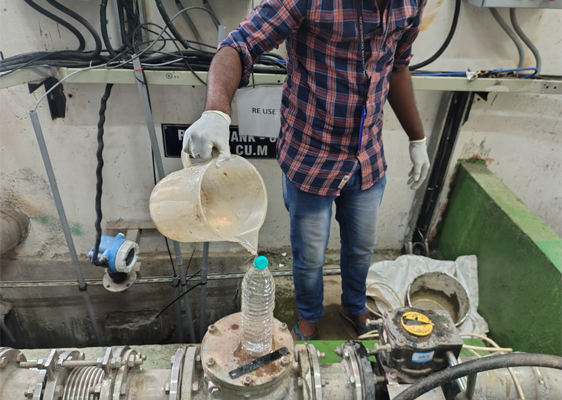
A Water Testing Laboratory in Chennai plays a crucial role in safeguarding public health by analyzing drinking water, borewell water, packaged water, and industrial water. Parameters such as pH, TDS, and hardness determine basic water quality, while tests for chlorides, sulphates, nitrates, and fluoride ensure chemical safety. Detection of iron and heavy metals prevents long-term health hazards and infrastructure damage. Read More
Microbiological analysis, including coliform and E. coli testing, identifies bacterial contamination, which is vital for preventing waterborne diseases. Advanced testing methods help in early detection of pollutants, ensuring water meets ISI, BIS, and WHO standards.
Regular water testing not only ensures safety for households but also supports industries, hospitals, schools, and packaged water plants in maintaining compliance. By providing accurate and reliable test results, Chennai’s water testing labs help build healthier communities and promote sustainable water use.

⁠Waste Water Testing in Chennai

Parameter:

pH, BOD (Biochemical Oxygen Demand) COD (Chemical Oxygen Demand) TSS (Total Suspended Solids), TDS (Total Dissolved Solids), Oil & Grease, Heavy Metals (Lead, Chromium, Cadmium, etc.), Nutrients (Nitrates, Phosphates, Ammonia), Coliform / E. coli

Description:

Waste Water Testing in Chennai is a critical process to ensure treated water meets safety and environmental norms. Parameters such as pH, BOD, and COD are tested to evaluate pollution load and treatment efficiency. TSS and TDS measurements indicate the level of solids present, while oil, grease, and heavy metals reveal industrial contamination risks.Read More
Nutrient analysis, including nitrates, phosphates, and ammonia, helps control algal blooms and protect aquatic life. Microbiological testing for coliform and E. coli ensures wastewater does not spread diseases when discharged.
Testing supports industries like textiles, pharmaceuticals, food processing, and chemical plants, as well as STPs (Sewage Treatment Plants) and ETPs (Effluent Treatment Plants) in maintaining compliance with TNPCB regulations.

Indoor Air Quality Monitoring in Chennai

Parameter:

Heat Stress, Humidity, Temperature,Suspended Particulate matter (SPM), Carbon dioxide, Carbon monoxide, Chromium as Cr, Hydrogen Sulphide, Arsenic as As, Lead as Pb, Oxides of Nitrogen, Oxygen, Ozone, Particulate Matter 2.5, Respirable Particulate matter, Sulphur dioxide, Coagulase positive Staphylococcus aureus, Coliform count, Escherichia coli, Listeria monocytogenes, Salmonella sp, Total Bacterial count / Total Plate count, Yeast and mold Count, Benzene, Benzene, Toluene & Xylene, Formaldehyde, Dibromochloromethane, Dichlorodifluoromethane, 1,1 – dichloroethane, 1,1 – dichloroethylene, 1,1 – dichlororopropylene, 1,1,1 – trichloroethane, 1,1,1,2 tetrachloroethane, Read More1,1,2 – trichloroethane, 1,1,2,2 tetrachloroethane, 1,2 – dibromoethane, 1,2 – dichloroethane, 1,2 – dichloropropane, 1,2 dibromo – 3 chloropropane, 1,2 dichlorobenzene, 1,2,3 – trichloropropane, 1,2,4 – trichlorobenzene, 1,2,4 – trimethylbenzene, 1,3 – dichlorobenzene, 1,3 – dichloropropane, 1,3,5 – trimethylbenzene, 1,4 – dichlorobenzene, 1.2.3 trichlorobenzene, 2 – chlorotoluene, 2,2 – dichloropropane, 2,2 – dichloropropane, 4 – isopropyltoluene, Air Movement, Ammonia, Boromoform, Bromobenzene, Bromochloromethane, Bromodichloromethane, Bromomethane, , Carbon tetrachloride, Chlorine, Chlorobenzene, Chloroethane, Chloroform, Chloromethane, , Cis 1,2 – dichloroethylene, Cis 1,3 dichloropropylene, Dibromomethane, Ethylbenzene, Fluorides, Hexachlorobutadiene, , lsopropylbenzene, M – xylene, Methylene chloride, N – butylbenzene, N – propylbenzene, Naphthalene, Nickel as Ni, P – xylene ,O – xylene, , Sec – butylbenzene, Styrene, , Tert – butylbenzene, Tetrachloroethylene, Toluene, , Trans 1,2 dichloroethylene, Trans 1,3 dichloropropylene, Trichloroethylene, Trichlorofluroromethane, Total Volatile Organic Compound (TVOC)

We tend to think that air pollution faced outside as risk, but air we breathe inside could be polluted. Indoor & work atmosphere air quality had long been neglected. However, monitoring of indoor air quality is important, because it can help prevent or reduce health risk associated poor air quality. Poor indoor/work atmosphere air quality is known to cause a range of health issues such as head-ache, fatigue, eye-irritation, respiratory illness or a lethal Carbon-Mono-Oxide could be life threatening. It could affect productivity of workers, or a poor ventilation can create a sick syndrome building resulting in fatigue, discomfort etc. Beyond this Indoor Air Quality is also governed by strict regulations such as OHSAS Standards, Factories Act, ASHRAE, IGBC Guidelines. Therefore, indoor air quality monitoring does divulge the quality & safety of Indoor/Work Atmosphere air quality.

Construction Water Testing in Chennai

Parameter:

pH, TDS (Total Dissolved Solids), Hardness, Chlorides, Sulphates, Alkalinity, Organic Impurities, Turbidity & Suspended Solids

Description:

Construction Water Testing in Chennai is essential to guarantee that water used in building projects does not compromise concrete quality or structural integrity. Testing parameters like pH, TDS, hardness, chlorides, and sulphates determine whether water is safe for mixing and curing. High levels of chlorides and sulphates can corrode reinforcement steel and cause cracks in concrete.

Excessive alkalinity and organic impurities may alter cement setting time, leading to weak structural bonds. Similarly, turbidity and suspended solids reduce the durability of construction materials.Read More
Testing ensures compliance with BIS (IS: 456–2000) standards, protecting against future structural failures. Builders, contractors, and developers in Chennai rely on laboratory testing to ensure safe, durable, and long-lasting construction.

⁠Borewell Water Testing in Chennai

Parameter:

Escherichia coli, Faecal coliform, Faecal streptococci, Coliform, Total Bacterial count.

Description:

Microbial contamination of Ground & Surface water can happen through several sources viz., industrial discharges by Industries, domestic waste discharges from nearby settlements, proximity to sewage treatment plants, faecal defecation by animals or human beings, run-off carrying contaminated soils, etc. Ground & Surface water are predominant source for domestic use & irrigation. Microbial contamination can therefore result in serious health diseases such as E Coli infections, diarrhoea, giardiasis, cholera, typhoid, salmonellosis, hepatitis A, polio etc. Hydrological drivers such as rainfall or irrigations activity, micro-organisms contained in animal dejections may be mobilized in runoff, that infiltrates through superficial soil and the unsaturated zone into ground water. Read MoreMicrobial testing of Ground & Surface water can identify potential health hazard & prevent public health concerns, apart from assisting in appropriate treatment for public supply, and understand the relationship between pathogens & diseases.

Drinking Water Testing in Chennai

Parameter:

Escherichia coli, Faecal coliform, Faecal streptococci, Coliform, Total Bacterial count.

Description:

Microbial contamination of Ground & Surface water can happen through several sources viz., industrial discharges by Industries, domestic waste discharges from nearby settlements, proximity to sewage treatment plants, faecal defecation by animals or human beings, run-off carrying contaminated soils, etc. Ground & Surface water are predominant source for domestic use & irrigation. Microbial contamination can therefore result in serious health diseases such as E Coli infections, diarrhoea, giardiasis, cholera, typhoid, salmonellosis, hepatitis A, polio etc. Hydrological drivers such as rainfall or irrigations activity, micro-organisms contained in animal dejections may be mobilized in runoff, that infiltrates through superficial soil and the unsaturated zone into ground water. Read MoreMicrobial testing of Ground & Surface water can identify potential health hazard & prevent public health concerns, apart from assisting in appropriate treatment for public supply, and understand the relationship between pathogens & diseases.

⁠Environmental Monitoring in Chennai

Parameter:

PM2.5, PM10, SO₂, NO₂, CO, O₃, NH₃, Pb, AQI, pH, TDS, hardness, chlorides, sulphates, nitrates, fluoride, bacteria, heavy metals, pH, BOD, COD, TSS, TDS, oil & grease, nutrients, heavy metals, coliform, pH, moisture, nutrients (NPK), organic matter, heavy metals, Day & night noise monitoring as per CPCB standards.

Description:

Environmental Monitoring in Chennai plays a crucial role in ensuring sustainable urban growth while protecting natural resources. By analyzing air quality parameters like PM2.5, PM10, and gases, it helps identify pollution hotspots. Water and wastewater monitoring ensures drinking water safety, efficient treatment of sewage/industrial effluents, and compliance with discharge norms.Read More
Soil testing evaluates fertility, contamination levels, and suitability for agriculture or development. Noise monitoring is equally important in a bustling city like Chennai to assess traffic, industrial, and construction-Regular monitoring helps industries, builders, hospitals, and government agencies comply with environmental regulations, reduce pollution, and adopt corrective measures. It also creates awareness among citizens and promotes eco-friendly practices.